

"This Was My Last Chance"
Opportunities to win the national open don't come around too often

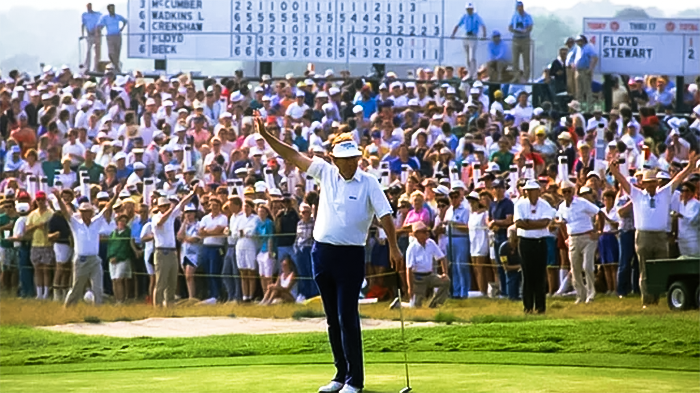
It’s one of our favorite weeks on the PGA TOUR here at Tour Backspin. It's a major championship week with the playing of the 126th U.S. Open, played this year at the always exciting Shinnecock Hills Golf Club. You know the drill; a major week means a major long-form read. Our journey through the past is focused on 1986 when Ray Floyd knew he didn’t have many opportunities left to win a major championship and that he needed to take advantage when he worked his way into contention. It was an emotional week for Floyd, scroll down to learn why.
Speaking of emotional, the finish to the RBC Canadian Open provided plenty as Bud Cauley notched his first win in his 239th start on the PGA TOUR. Cauley had to comeback from a nightmarish auto accident and extended recuperation to return to the tour. We’ve got a recap of the action. (Below the paywall).
Who reads Tour Backspin? Our subscription list features current and former players on the PGA TOUR and Champions Tour, PGA of America professionals, PGA of Europe head pros, Korn Ferry players, current and former tour caddies, equipment designers, golf course architects, private club general managers, public golf course managers, club historians, golf journalists, and golf sickos just like you. Thank you for reading.
If you would like to partner with us and put your product or service in front of a truly passionate demographic who loves golf, please contact me at larry@tourbackspin.com.
Scottie Scheffler can win the career Grand Slam with a win at Shinnecock this week. Do you think he’ll accomplish the feat this week? Let us know in the Tour Backspin Poll.
If you watch a bit of golf this weekend, then the What Hole Is It? should be easy. Scroll down to view, enter your answer, and if you’re correct, you may win credit in the Tour Backspin Golf Shop.
This week’s Vintage Ad is from 1986 and features the newly crowned U.S. Open champion. Scroll down to view (below the paywall).
Our new video, “Workin’ For A Living With The Rainier Greens Crew” takes you inside a day on the course with the unsung heroes of golf course setup and preparedness. Join over 500 subscribers to The Tour Backspin Show on YouTube, who had advance access to this video, and you won’t miss a new release. Take a look and subscribe by clicking on the graphic below.

The Tour Backspin Poll
In last week’s Tour Backspin Poll, we asked what your thoughts were regarding a rollback of equipment to limit distance. There were 50% of respondents who thought equipment should be rolled back for elite golfers only, while 33% didn’t think it should be rolled back for anybody. The other 17% of respondents thought equipment should be rolled back for everybody.
The USGA and R&A addressed the issue yesterday at the U.S. Open. You can read it HERE.
Scottie Scheffler needs the U.S. Open to complete a career Grand Slam. Will he get it this week? Let us know what you think in this week’s Tour Backspin Poll.
“He Looked At Me, But He Didn’t See Me”
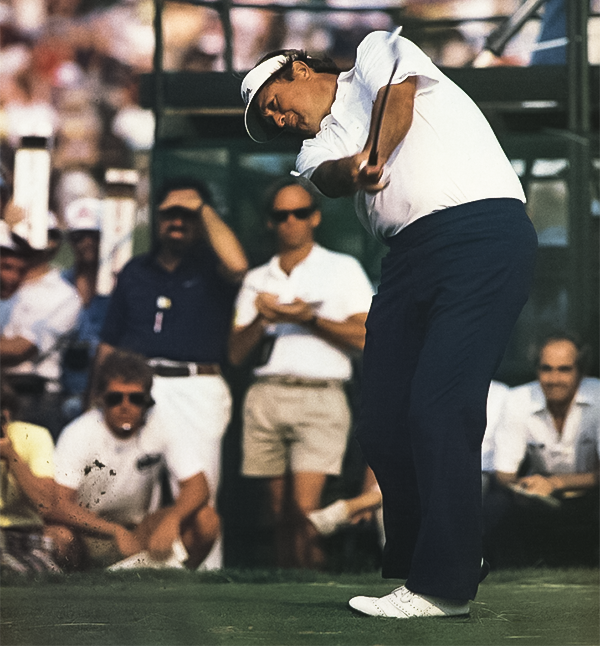
The USGA announced, in the Summer of 1981, the venue for the 1986 U.S. Open, and it was quite the surprise. The U.S. Open was returning to Shinnecock Hills Golf Club for the first time since 1896. That U.S. Open was the second in the event’s history, and there were none of the challenges encountered in staging it in 1986.
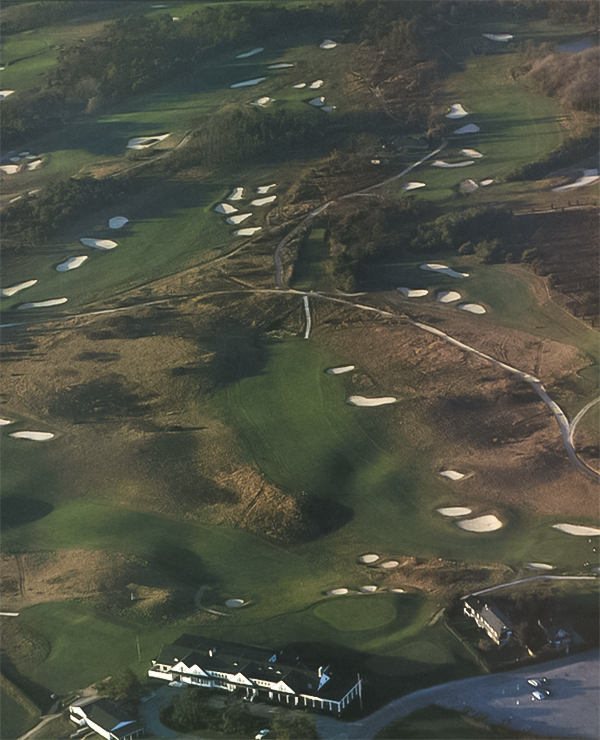
These challenges included the course’s remoteness: it was located on the eastern tip of Long Island, a hundred miles from New York City, between Peconic Bay and the Atlantic Ocean. With only 300 members, and half of those living outside the area, how would the club fulfill the traditional responsibilities associated with hosting an Open? Located in The Hamptons, it was only a part-time club closed from election day to April 15th, tax day. The clubhouse, the oldest in the U.S., isn’t heated or air-conditioned. The members were low-profile types who couldn’t imagine 20,000 spectators tramping over the course, along with all the vehicle traffic jammed into every available space. Nor did the idea of temporary buildings and tents located around the course appeal to the members.
All good reasons for the USGA to select a different course from all the great possibilities available. But Frank Hannigan, the Executive Director of the USGA, wanted to test the greatest players on one of the country’s most untested courses.
Both Golf Digest and Golf Magazine illustrated the logistic problems with comical graphics.
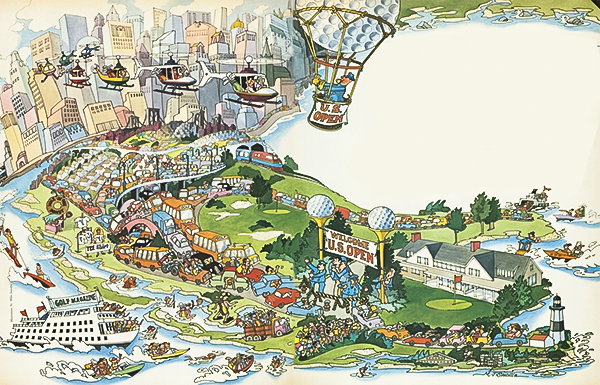
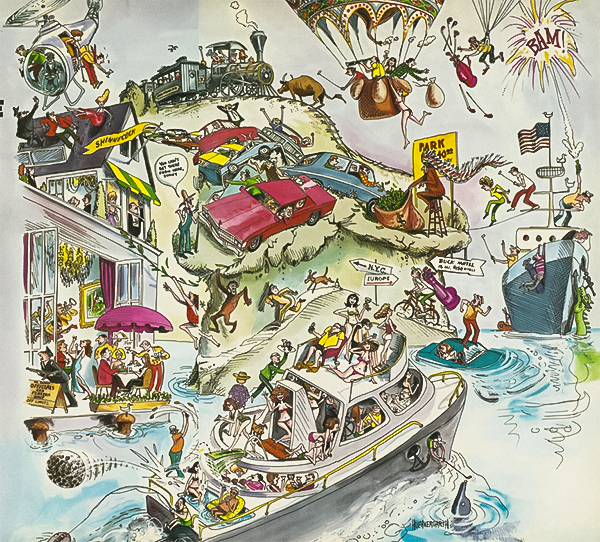
The USGA had the PGA TOUR to thank for the possibility of Shinnecock hosting an Open. Deane Beman approached the club in the mid-1970s with a proposal to replace Firestone Golf Club as the home of the World Series of Golf. Beman met with Virgil Sherrill, a Manhattan executive and the club president at the time.
“We decided we weren’t equipped to handle the event year after year,” Sherrill said to Mike Bryan, contributing editor of Golf Magazine, for the June 1986 issue U.S. Open preview. “In fact, we decided we couldn’t handle it for just one year.”
Although the club felt it couldn’t handle an event the size of the World Series of Golf, they were flattered when the USGA approached them. They understood they had a wonderful course layout, and that they were a historic club, one of the five charter clubs that founded the USGA. Maybe, they thought, they could host the low-key Walker Cup matches and let a select audience in on the secret of Shinnecock. The USGA scheduled the 1977 matches for the club, and they were a big success, with the Americans defeating Great Britain and Ireland 16 to 8.
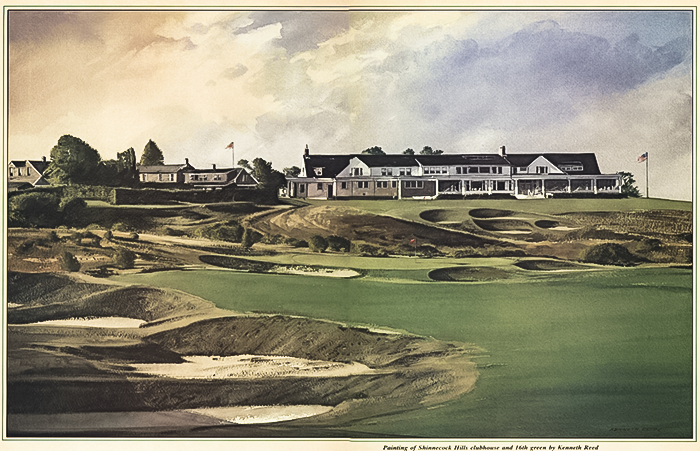
Within months, the USGA came calling again. This time, they wanted the club to host a U.S. Open. With the support of the new president of the club, Dr. Jose Ferrer, whose lobbying efforts won over the members, the club showed interest in hosting the national open. The last concern, that the workload would be too much for the small membership, was addressed with a drastic change to the organization of the event. Instead of splitting responsibilities between the USGA and the host club, the USGA would take over all aspects of the event. Instead of splitting the revenues, the USGA would pay the club a flat fee, one that was large enough to entice the membership, but not so much that the USGA would run the risk of losing money. This would be the first U.S. Open run entirely by the USGA.
“Why in the world take the Open to such a secluded site?”
The deal was wrapped up in the Spring of 1981, and the USGA announced in the Summer of the same year that the exclusive and almost forgotten Shinnecock Hills would host the national open once again.
Few players on the PGA TOUR had played the course, and the younger players probably never even knew it existed. The announcement was met with immediate questions and concerns. Where would the players, press, and fans stay? How would they get to the club? On an ordinary Summer weekend, the trip to Shinnecock Hills from mid-town Manhattan took more than three hours.
“Everyone knows how bad it’s going to be,” Payne Stewart, a frequent critic of the USGA, told Golf Magazine’s Bryan. “I would think the USGA would think about the logistics we’ll have to deal with. Why in the world take the Open to such a secluded site?”
Winning the Masters in April gave the 46-year-old Jack Nicklaus a new lease on life and re-lit the smoldering embers of the Grand Slam fire that burned within him. With renewed enthusiasm, he threw himself into preparation for the Open. He played Shinnecock seven times in the weeks leading up to the tournament, including a rainy round on the Saturday before tournament week to see how the 6,912-yard, par-70 course played in those conditions.
“I’m as well prepared as I can probably be,” he told reporters, including Larry Fox of the Daily News. “I haven’t prepared this enthusiastically for an Open in years. Let’s say the way I was playing before, the Open was not foremost in my priorities…until I won the Masters.”
In addition to Nicklaus, other pre-tournament favorites included the defending champion Andy North, Ben Crenshaw, who was a vocal fan of the course, Hal Sutton, Tom Watson, Lee Trevino, Lanny Wadkins, Greg Norman, and, despite his criticism of the course selection, Payne Stewart. Calvin Peete, known as “Mr. Accuracy,” topped the Golf Digest early form chart because they felt the course setup was tailor-made for him.
“I don’t remember the last time I lost a ball in competition.”
One name missing from that Golf Digest chart was Raymond Floyd. Leading up to the Open, Floyd had 10 top 25 finishes, including a tie for second in the Hertz Bay Hill Classic, but he missed the cuts at the Masters and the Houston Open. The week before the Open, he led the Manufacturers Hanover Westchester Classic going into the final round, but finished with a 77. Still, his confidence was high coming into the Open.
The weather turned awful for Thursday’s opening round as rain pelted the course and the wind blew—from a totally different direction than it had in practice rounds, confounding the players. Even though he made a point of playing a practice round in rainy conditions, Jack Nicklaus found the going tough. He shot a seven-over 77 in a round that included three double bogeys, including one at the 409-yard, par-4 10th hole. A gust of wind blew him off balance, and he sent his drive miles to the right, resulting in a lost ball, a first for him as a professional.
“I don’t remember the last time I lost a ball in competition,” Nicklaus said after his round.
Bob Tway came to Shinnecock riding high after winning the Manufacturers Hanover Westchester Classic the week before. He was the only player who matched par in the stormy conditions of the first round. Greg Norman came in with a 71, while six players, including Tom Watson and Rick Fehr, were bunched at 72. Lanny Wadkins was tied with 10 other players, including Lee Trevino and Tom Kite, at 74, while Raymond Floyd was in a huge group of players tied at 75.
Conditions were much better on Friday for the second round. While it was overcast during the morning, with a few scattered showers, by the afternoon the sun was shining. The more benign weather conditions were reflected in the lower scores shot on Friday.
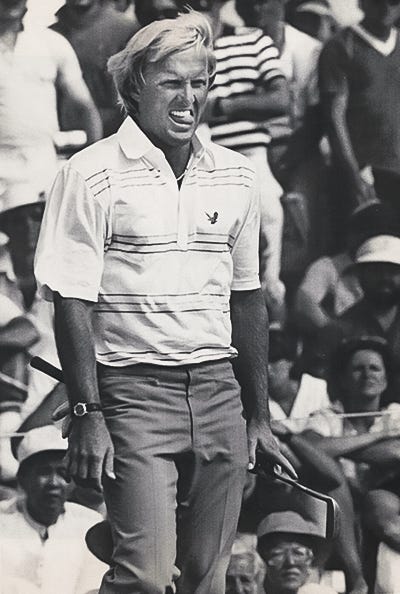
Both Greg Norman and Lee Trevino toured Shinnecock in just 68 strokes, Norman for a two-round total of 139, and the lead, Trevino two strokes higher at 142, tied for second place with Denis Watson. Ray Floyd also shot a 68 and was at 143, tied with the first-round leader, Tway (73), and Tom Watson (71). Seven players were knotted at 144, including the Wadkins brothers, Lanny (70) and Bobby (69), and Payne Stewart (68).
Norman, who had heartbreaking runner-up finishes at majors the last couple of years, was not taking anything about his lead after the second round for granted.
“A 10-shot lead wouldn’t be comfortable here,” he said after his round to reporters, including Denne H. Freeman of the Associated Press. “You have to play as if you are three shots behind. You have to forget all the hype.”
Trevino, on the other hand, was upbeat and roaring to go.
“I’m playing well,” he said to Bob Seligman, staff writer at The Standard Star of New Rochelle, NY. “I don’t know how confident I am, but I’m playing well. I’m excited, very much. I can’t wait for tomorrow.”
Joey Sindelar started his Friday by making plane reservations to return home to Horseheads, NY. He was sure he was going to miss the cut after an opening round of 81. He finished the day equaling the competitive course record of 66, and his 147 total made the cut easily.
Greg Norman and Lee Trevino played together in Saturday’s third round, and Jack Nicklaus, who was in the ABC booth providing commentary, spoke about the difficulty of playing alongside Trevino.
“He’s very tough to play with,” Nicklaus said. “He’s talking all the time, always moving around. It’s hard to concentrate. It’s hard, but I don’t think it’s anything he does on purpose.”
Norman was cruising along, building a five-shot lead midway through the third round, until he made one poor swing, his tee shot at the 377-yard, par-4 13th hole, that resulted in a double bogey. Trevino birdied the same hole, and the two were tied. Then things got interesting with the spectators.
On the next tee, a fan heckled Norman, calling him a choke artist and adding some unkind adjectives to the insult. Norman walked right over to the gallery rope to confront the fan. (See the Bonus Story)
Norman finished with a 71 and held the lead at 210. One shot back were Trevino, who shot a 69, and Hal Sutton, who joined the course record-holding crowd with a 66. Trevino, age 46, was attempting to become the oldest player to win a U.S. Open, a feat that would rival Nicklaus, who won the Masters at age 46 a few months earlier.
There were 14 players within five strokes of Norman, including Ray Floyd and Payne Stewart, at 213. Nicklaus fired a 67 in the third round and moved up the leaderboard to 216, while Lanny Wadkins was tied with his brother Bobby at the same number.
Sunday’s final round was wild with ten players claiming the lead at one point or another. For one confusing moment, eight of them held the lead at the same time. Norman’s game disappeared early in the round, and he couldn’t find it anywhere in the holes that followed. He couldn’t blame the crowd, who were polite and quiet. He finished with a 75 and a total of 285.
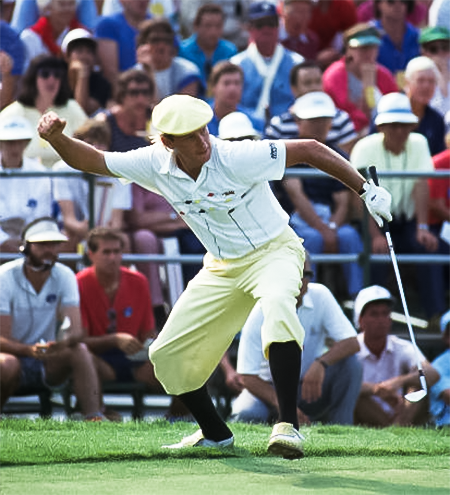
There was such a crowd at the top of the leaderboard midway through the final round that Dan Jenkins, writing for Golf Digest, wrote “it looked for much of the final round as if the U.S. Golf Association would be confronted with the first gangsome ever to enter a playoff.”
Floyd, Norman, Sutton, Stewart, Beck, Wadkins (Lanny), Trevino, Crenshaw, McCumber, and Tway all held the lead at some point in the final round. The turning point came early in the final nine holes after Floyd saved par with a 20-foot putt on the 12th hole, and then he pulled even with the current leaders, Stewart and Sutton, with a birdie at the 13th hole. All three were at even par.
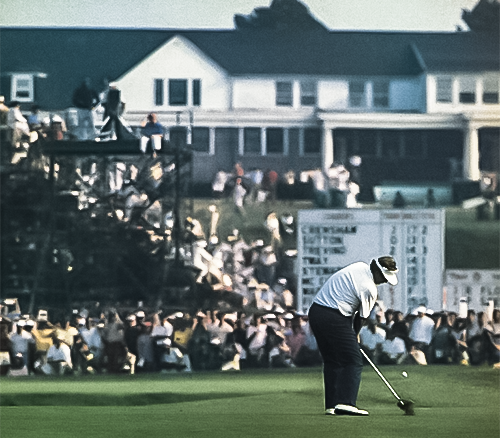
Floyd took the lead for good when Stewart bogeyed the 14th hole, and put the tournament away when he buried a 10-foot birdie putt at the 16th hole for a two-shot lead. He then faced the tough, 172-yard, par-3 17th hole. His 5-iron approach got close enough for a cinch par, and his par at the final hole gave him a two-stroke victory over a hard-charging Lanny Wadkins, who set a new competitive course record with a 65 for a total of 281. Chip Beck also recorded a 65 in the final round to tie Wadkins for second place, and Mark Calcavecchia also tied the record in the final round, coming in with a total of 287.
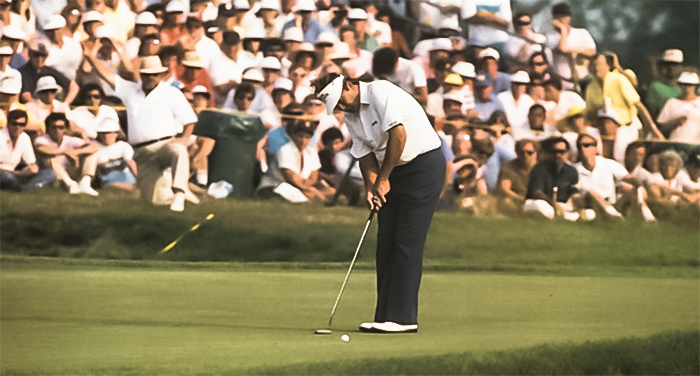
While Trevino was trying to become the oldest player to win the U.S. Open, it was Floyd, age 43 and nine months, who achieved the feat. He broke Ted Ray’s record of 43 years, 4 months, and 16 days when he won the 1920 Open.
For Floyd, the victory was especially gratifying after he blew the lead in the Manufacturers Hanover Westchester Classic the week before. He knew that at 43, almost 44, his days on the PGA TOUR were limited.
“I never really thought about being 43-years-old, or that this could be my last chance to win the Open. But then some people brought it up this week, and I had to think about it. You have to face reality.”
Floyd spent Saturday night, before retiring for the evening, giving himself a stern pep talk.
“The talk I had with myself last night was pretty staunch and severe,” he admitted after his round. “I felt like I’d really better get on with it. I had put myself in this position, and if it didn’t happen, it never would. I felt that realistically, I had to do it. This was my last chance.”
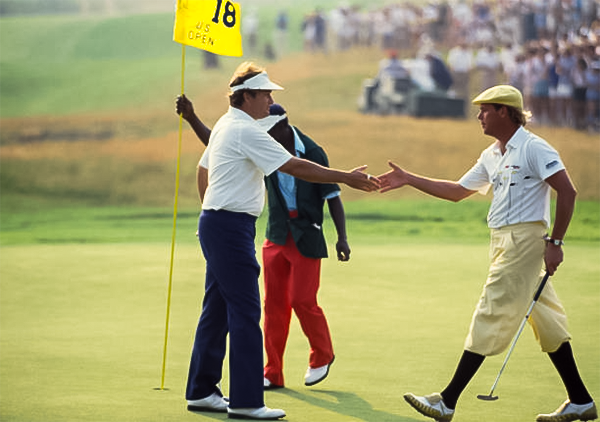
With “the look” and a feeling that time was slipping away, Ray Floyd surged past a host of younger players and fellow old pro Lee Trevino to win the 1986 U.S. Open with a back nine performance for the ages. In the process, he became the oldest player to win the U.S. Open. He would hold that title for just four years before being replaced by Hale Irwin, who was 45 years old when he won the 1990 U.S. Open at Medinah.
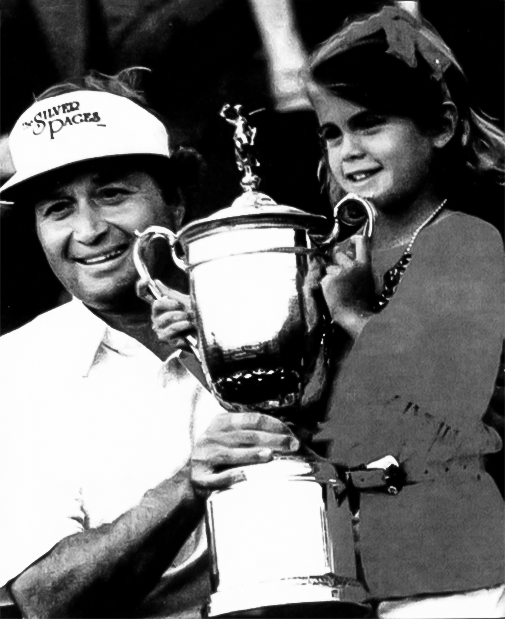
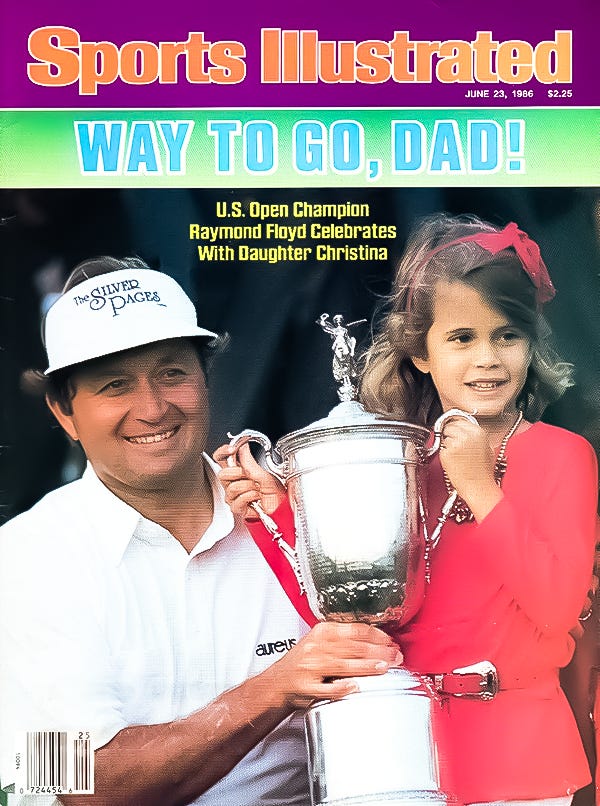
Here’s what I’ve written about the U.S. Open in the past:
“The Nightmare Round | The Historic Round” (2021) Johnny Miller experiences the highs and lows of U.S. Open golf in 1973.
“U.S Open Sectional Qualifying | The Longest Day In Golf” (2021) An on-the-ground report on U.S. Open sectional qualifying at Meadow Spring Country Club in Richland, WA, during Covid.
“Battle at Brookline” (2022) A crowded leaderboard and exciting finish in the 1963 U.S. Open lead to a playoff.
“U.S. Open Special Edition” (2023) Lee Trevino wins the 1971 U.S. Open at Merion.
“I Told You!” (2024) Tom Watson’s miracle chip on the 71st hole wins 1982 U.S. Open.
“Holy Mackerel!” (2025) Andy North turns a cakewalk into a nail biter at the 1978 U.S. Open.
WHAT HOLE IS IT?
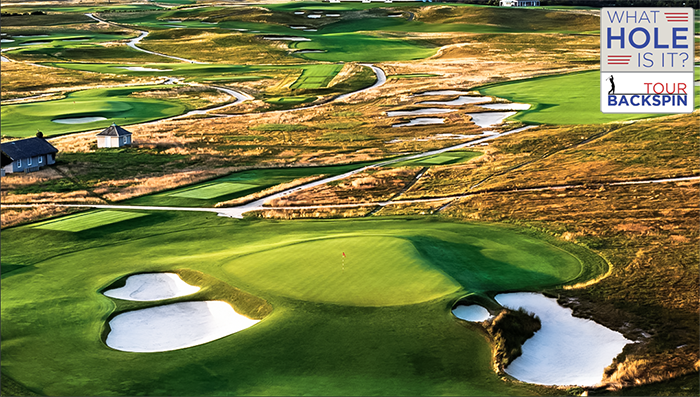
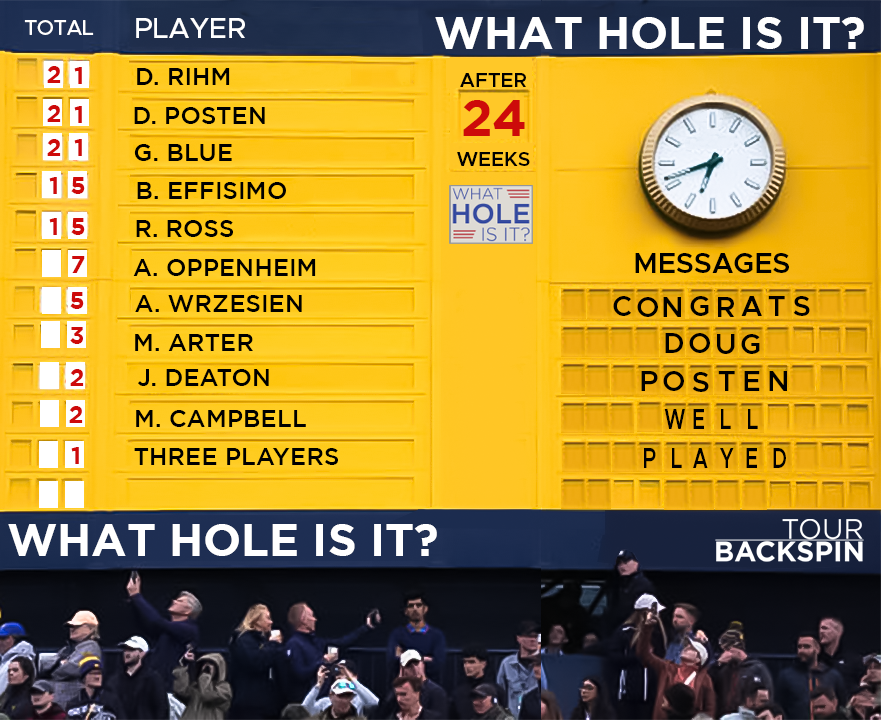
Congratulations to Doug Posten, our 2024 WHII champion, for winning the WHAT HOLE IS IT? contest last week. Doug beat six other correct answers in the blind drawing. The correct answer was the 11th hole at TPC Toronto at Osprey Valley in Caledon, Ontario, Canada. We’re adding $10 to Doug’s discount code in The Tour Backspin Golf Shop.
I screwed up last week’s leaderboard failing to update the totals in the column left of the player’s names. This week’s board has been correctly updated.
Using a discount code requires a few steps to complete. If you’re having trouble, email me at larry@tourbackspin.com and I’ll send you step-by-step instructions. Next up, new additions to the Tour Backspin Golf Shop including our new diner coffee cup, and wall art. Check out the Tour Backspin Golf Shop HERE. It’s the only place you can order the famous Tour Backspin 19th Hole Hot Sauce.

Bonus Story
The Crowd Gets Rowdy In The Hamptons
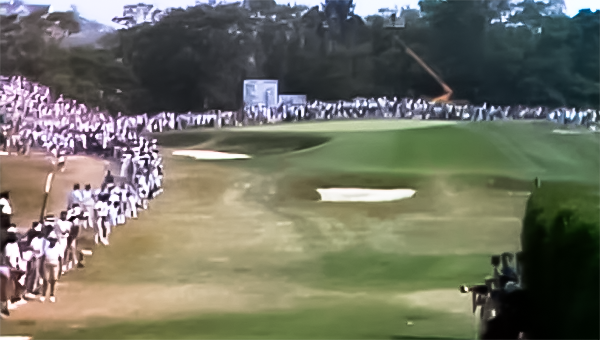
The residents of the Hamptons, both full-time and the weekend set, exhibit the quiet, under-the-radar lifestyle that only those accustomed to wealth can pull off. But when the USGA chose Shinnecock Hills to host the 1986 U.S. Open, it opened the small upper-crust town of Southampton to the public. In fact, for those who had houses in Southampton, the U.S. Open was not that big of an attraction.
Most of the spectators who walked Shinnecock’s hills on Saturday were full-throated members of “Lee’s Fleas,” the name given to supporters of Lee Trevino. The crowd lustily rooted for Trevino and against his playing partner, Greg Norman.
“If he’d said something like that at any other time, he’d wind up with a face full of fist.”
After a double bogey on the 13th hole, Norman was a bit hot under the collar as he walked onto the 14th tee. Then, he got heckled by a fan. He walked over to the ropes and confronted the fan.
“I told him if he’s got something to say to me, he should say it after the round when I can do something about it,” Norman related to the press after his round. “If he’d said something like that at any other time, he’d wind up with a face full of fist.”
Trevino had his own trouble with the crowd on the next green when he told a fan to shut up.
“I’ll have to get earplugs,” he muttered as he came off the green.
Then, in the final round, the eventual winner, Ray Floyd, was interrupted by photographers four times. They were releasing the shutters on their cameras during Floyd’s swing, a big no-no on the tour. Finally, just before hitting one of the defining shots of his back nine charge at the 16th hole, he backed off and told the photographers to stop it.
He then hit his shot to 10 feet and sank the putt for a birdie that gave him a two-shot lead with just two holes to play.
Tour Backspin Quiz | The U.S. Open on Television
We’ve got four questions regarding television “firsts” at the U.S. Open.
What U.S. Open was the first to be televised locally?
What U.S. Open was the first to be televised nationally?
What U.S. Open was the first to be televised in color?
What U.S. Open was the first to have coverage of all 18 holes?
Extra credit if you know the years of each.
Scroll down for answer.
Blind Shot
Click for something fun. 👀

MY OPEN TABS
Andy Johnson at Fried Egg Golf has your Shinnecock 101 class.
Gary Van Sickle at The First Call catalogs the best swings that define majors in the 21st century majors. [BTW, I used a gift link so you can read that article for free. If you want to reward me for helping you bypass paywalls, feel free to become a paid subscriber to this newsletter.]
Gabby Herzig of The Athletic, who is a national treasure, explains why Shinnecock is such a gnarly test. [BTW, I used a gift link so you can read that article for free. If you want to reward me for helping you bypass paywalls, feel free to become a paid subscriber to this newsletter.]
Brody Miller and Alex Andrejev have all the sordid details about the Phil Mickelson story in the Athletic. [BTW, I used a gift link so you can read that article for free. If you want to reward me for helping you bypass paywalls, feel free to become a paid subscriber to this newsletter.]
Tour Backspin Quiz Answer
The first local broadcast of the U.S. Open was at the 1947 event held at St. Louis Country Club.
The first national broadcast of the U.S. Open was at Baltusrol in 1954.
The first color broadcast happened in 1965 at Bellerive.
The first broadcast of all 18 holes at a U.S. Open occurred in 1977 at Southern Hills.


SOON TO BE A DOCUMENTARY FILM!
What’s Below The Paywall
The RBC Canadian Open Wrap-up
Tour Backspin Golf Club Bonus Story (“He Goes Into a Trance”)
Tony Lema documentary movie update
Tour Backspin Golf Club Blind Shot
Vintage Ad
Join the Tour Backspin Golf Club to read more.
